Table of Contents
What is Typhoid Fever?
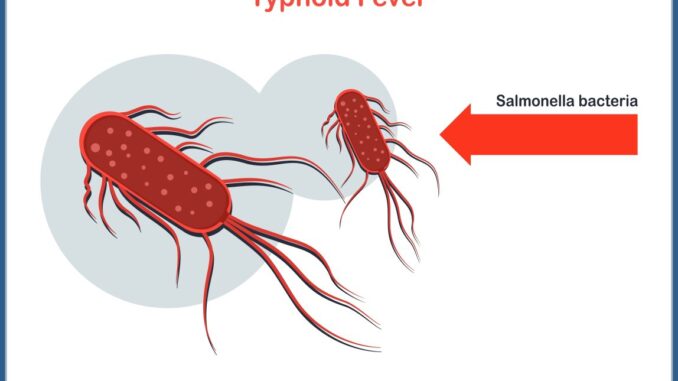
- Typhoid fever, also called enteric fever, is a life-threatening infection caused by the bacterium Salmonella enterica (S. enterica) serotypes, Typhi (most common) and Paratyphi A, B, and C.
- Typhoid fever causing bacteria is generally found in contaminated water, food, urine or faeces.
- Typhoid fever affects the small intestine and leads to high fever, abdominal pain, and other symptoms.
Global Burden of Typhoid Fever
Worldwide Burden of Typhoid Fever
- Typhoid fever causes considerable illness and death in resource-limited regions such as parts of Asia, Africa, and South America, where access to clean drinking water is limited, and sanitation is inadequate.
- As of 2019, the WHO estimated that 9 million people get sick from typhoid, and 110,000 people die from it every year.
- It is estimated that 11–21 million cases occur globally each year.
- It is uncommon in countries like the U.S., Canada, Japan, Western Europe, and Australia.
Burden of Typhoid Fever in Developing Countries
- The disease is particularly prevalent in rural areas of developing nations lacking modern sanitation systems.
- Countries in South and Southeast Asia, Central and South America, Africa and the Caribbean are most affected by typhoid.
- Travellers are most at risk when visiting Pakistan, India or Bangladesh.
What Causes Typhoid?
Typhoid fever is caused by the bacterium Salmonella enterica (S. enterica) serotypes, Typhi (most common) and Paratyphi A, B, and C.
How Does Typhoid Transmit?
Typhoid fever mainly spreads through the faecal-oral route, when a person ingests food or water contaminated with the stool of an infected individual. The common modes of transmission include:
- Unsafe Water Sources
- Poor Personal Hygiene
- Contaminated Food
- Close Exposure to Infected Individuals
What are the Risk factors of Typhoid?
- Living in unhygienic conditions
- Poor sanitation and unsafe water
- Frequent travel to typhoid-affected areas
- Close contact with a person infected with typhoid
- Contact with flies that carry germs from faeces to food
What is the Incubation Period of Typhoid Fever?
The incubation period for typhoid fever usually ranges from 6 to 30 days.
What are the Symptoms of Typhoid?
Early Symptoms
- Continuous high fever that may rise up to 104°F (40°C) (Fever more than 72 hrs)
- General weakness and extreme tiredness
- Persistent headache
- Reduced appetite
Advanced Symptoms (if not treated):
- Abdominal pain and discomfort
- Diarrhoea or constipation
- Rose-coloured rash on the chest or abdomen
- Enlargement of the liver or spleen
Signs of Typhoid: By Age
- Children under 5: Diarrhoea and convulsions are more common; headache and abdominal pain are less frequent.
- School-aged children: Abdominal pain, tenderness, altered mental state, and upper respiratory infections are more common.
- Adolescents: Headache, cough, and pneumonia are more frequently observed.
- Adults: Nausea, vomiting, constipation, and chills (about 4 times more than in children) are common.
What are the Complications of Typhoid Fever?
- Intestinal perforation, causing severe abdominal pain and life-threatening infection
- Sepsis, a serious systemic inflammatory response to infection
How Can We Diagnose Typhoid?
Through Clinical Evaluation
Diagnosis begins based on symptoms such as prolonged fever, abdominal pain, headache, and history of travel or exposure in endemic areas.
Through Laboratory Diagnosis
- Blood Culture: This is the standard diagnostic method; it is positive in 60 to 80 percent of patients with typhoid.
- Bone Marrow Aspirate (BMA) Culture: Most sensitive (80–95%), effective even after antibiotic use.
- Stool and Urine Culture: Culturing stool or urine samples to find Salmonella typhi.
Serological Diagnosis of Typhoid Fever
Widal Test:
- The Widal test is a blood test used to detect typhoid fever.
- Widal test looks for ‘O’ and ‘H’ antibodies that the body produces in response to the Salmonella bacteria.
- In this test, a patient’s blood serum is mixed with dead Salmonella bacteria that contain specific antigens.
- If the person has typhoid, the antibodies in the serum react with these antigens.
When this reaction occurs, the antigens and antibodies bind together and form visible clumps, which indicates a positive test result.
Rapid Diagnostic Tests
Typhidot test:
- The Typhidot test measures both IgM and IgG antibodies against a 50 kDa outer membrane protein (OMP) antigen in a miniaturised dot blot enzyme-linked immunosorbent assay (ELISA) format.
- The test is considered positive if the IgM is positive, and indeterminate if the IgG is positive but IgM is negative.
Tubex Test:
- Tubex test detects antibodies against Salmonella typhi (O9 antigen) using brown magnetic particles and blue indicator particles.
- Blue colour = positive (antibodies present); colourless solution = negative (antibodies absent).
Molecular Assay -Polymerase Chain Reaction:
- PCR detects and amplifies Salmonella Typhi DNA from blood or other samples.
- It targets specific genes (commonly the flagellin gene) to confirm infection.
- PCR is highly sensitive and specific compared to routine tests.
- It can detect infection even when bacteria are dead or present in low numbers.
Challenges in Diagnosing Typhoid Fever
- Typhoid burden is highest in low-income countries, but accurate case numbers are hard to estimate due to limited diagnostic facilities.
- Diagnosis often relies on clinical judgment rather than laboratory tests, leading to misdiagnosis.
- Symptoms are non-specific and overlap with diseases like dengue, malaria, TB, influenza, typhus, and leishmaniasis.
- Co-existence of multiple febrile illnesses in endemic areas makes diagnosis difficult.
How Can Typhoid be Treated?
Antibiotics Treatment for Typhoid Fever
Antibiotics used in the past decades are:
- Amoxicillin
- Chloramphenicol
- Trimethoprim–sulfamethoxazole
Current treatments (due to multidrug resistance):
- Fluoroquinolones
- Ciprofloxacin
- Ofloxacin
- Levofloxacin
- Extended-spectrum cephalosporins
- Oral: Cefixime
- Parenteral: Ceftriaxone
- Oral Azithromycin
- Parenteral Meropenem
Recovery Time for Typhoid Fever
- Fever improves: 3–5 days after antibiotics
- Full recovery: weeks
- Return to work/school: after fever subsides + antibiotics
Drug-Resistant Typhoid: Causes and Public Health Threat
- Drug-resistant typhoid fever is an increasing public health concern worldwide, with low- and middle-income countries facing the greatest burden.
- Poor water, sanitation, and hygiene make drug-resistant typhoid more common, especially in low- and middle-income countries.
- Without proper lab testing, presumptive diagnosis can cause inappropriate antibiotic use.
- Limited lab testing and weak health systems lead to wrong antibiotic use, making resistance worse.
Home Care and Hospitalization for Typhoid Patients
Home Care
- Take antibiotics exactly as prescribed to fully treat the infection.
- Ensure plenty of rest and drink sufficient fluids to stay hydrated.
- Eat soft, nutritious foods to support recovery.
- Maintain strict hygiene, including handwashing, to prevent spreading the disease.
- Monitor symptoms carefully and consult a doctor if fever or other signs worsen.
Hospitalization
- Severe cases, such as high fever, dehydration, or abdominal complications, require hospital admission.
- Intravenous antibiotics and fluids are administered for proper treatment and hydration.
- Patients are closely monitored to detect and manage complications early.
- Supportive care is provided for vulnerable groups, including children, elderly, or severely ill patients.
What are the Prevention & Control Measures for Typhoid?
Typhoid Fever Prevention Strategies
- Wash hands with soap and water before eating, after using the toilet, and after handling food.
- Use bottled, boiled, or treated water; avoid ice made from unsafe water.
- Consume freshly cooked meals; avoid raw or undercooked meat, shellfish, and street food.
- Maintain hygiene in households where someone is ill; do not prepare food for others if sick.
- Wash utensils, surfaces, and hands before and after preparing or eating food.
- Get vaccinated if living in or traveling to areas where typhoid is common.
- Prefer well-cooked or packaged food and use bottled water for drinking and cooking if unsure.
Typhoid Vaccines: Types, Effectiveness, and Schedule
The World Health Organization currently recommends three different types of vaccines for the prevention of typhoid fever.
| Name | Typhoid conjugate vaccines (TCV) | Ty21a | Vicapsular polysaccharide vaccines (ViCPS) |
| Administration | Intramuscular injection | Oral capsules | Intramuscular injection |
| Age | >6 months of age | >6 years of age | >2 years of age |
| Number of doses | 1 dose | 3 to 4 doses | 1 dose with boosters every 2 to 3 years |
| Duration of protection | > 4 years | 7 years | 2 years |
| Effectiveness | 79% to 85% | 50% to 80% | 50% to 80% |
Source: Take on Typhoid (https://www.coalitionagainsttyphoid.org/the-issues/typhoid-vaccines/#:~:text=TCVs%20provide%20strong%20protection%20for,many%20more%20are%20under%20development.)
Role of Safe Water, Sanitation, and Hygiene (WASH) in Prevention of Typhoid
- Typhoid fever spreads through the faecal-oral route, when bacteria from faecal matter contaminate food, water, hands, or surfaces.
- Providing safe drinking water through treatment, boiling, or filtration helps prevent infection.
- Installing and properly managing toilets and sanitation systems reduces environmental contamination and disease transmission.
- Educating communities about handwashing with soap and safe food-handling practices lowers the risk of typhoid.
- Implementing these WASH interventions protects public health, reduces the spread of typhoid, and saves lives.
Frequently Asked Questions (FAQs)
Is Typhoid Fever Contagious?
- Typhoid fever can spread from person to person through the faecal-oral route, often via contaminated food, water, hands, or surfaces
How Long Does Typhoid Fever Last?
- With treatment, symptoms usually improve within 1–2 weeks, but full recovery can take several weeks.
- Without treatment, illness may last 3–4 weeks or longer and can become more severe.
Can Typhoid Be Fatal?
- Typhoid fever can be life-threatening, especially if untreated, as it may cause serious complications like intestinal perforation, internal bleeding, or sepsis.
- Early diagnosis and proper treatment with antibiotics significantly reduce the risk of death.
References and For More Information
https://my.clevelandclinic.org/health/diseases/17730-typhoid-fever
https://triopharmacy.co.uk/understanding-typhoid-causes-symptoms-vaccines-and-prevention/
https://www.apollohospitals.com/health-library/what-part-of-the-body-does-typhoid-fever-attack
https://empendium.com/mcmtextbook-sae/chapter/B78.II.18.96.1.?rfmcm
https://www.coalitionagainsttyphoid.org/drug-resistant-typhoid-what-we-need-to-know/
https://typhoidneedsattention.com/blogs/home-care-for-typhoid-patients-the-dos-and-donts/
https://www.coalitionagainsttyphoid.org/the-issues/typhoid-and-wash/
