Table of Contents
What is Anal Cancer?
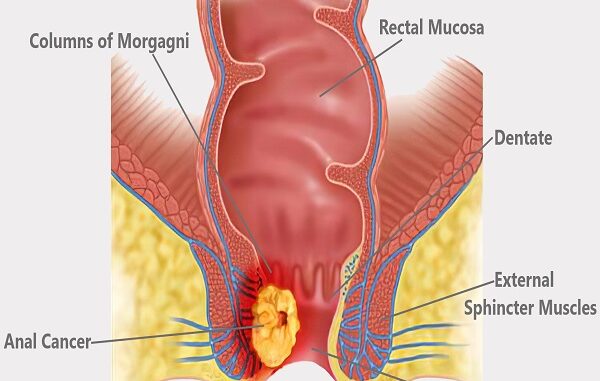
- Anal cancer is the rarest type of cancer that develops in the tissues lining our anal canal or in the skin near its opening.
- Anal cancer forms in the anus and is often caused by Human Papilloma Virus (HPV)
- Most anal cancers are typically a squamous cell cancer and are curable with radiation, chemotherapy and surgery, if detected early.
What are the Differences Between Anal Cancer and Colorectal Cancer?
- In general terms, anal cancer and colorectal cancer is often perceived as the same. However, there are specific differences between anal and colorectal cancer.
- Anal cancer affects the anal cancer and anus while colorectal cancer affects the large intestine and rectum area.
- Anal cancer is mainly caused by the infection of the human papilloma virus and has symptoms like anal pain, bleeding, itching and lump. On the other hand, genetic mutations, obesity, age, polyps, and inflammatory bowel disease cause colorectal cancer.
- Specific symptoms related to anal cancer are anal pain, bleeding, itching and lump around the anus while symptoms of colorectal cancer include change in bowel habits, blood in the stool and weight loss.
| Aspects | Anal Cancer | Colorectal Cancer |
| Cell type | Anal cancer is typically squamous cell carcinoma, similar to skin cancer | Colorectal cancer is usually adenocarcinoma, which develops from glandular tissue |
| Area affected | Anal cancer affects the anal canal, at the end of the digestive tract and anus. | Colorectal cancer affects the large intestine including the cecum, ascending colon, transverse colon, descending colon, sigmoid colon and rectum. |
| Caused | Anal cancer is caused by infection with the human papilloma virus | Genetic mutations, obesity, age, polyps, and inflammatory bowel disease are often linked colorectal cancer. |
| Cell | Anal cancer is a squamous cell cancer | Colon cancer is an adenocarcinoma, |
| Specific Symptoms | Bleeding, itching and lump around the anus; anal pain when passing bowel movements | Change in bowel habits, blood in stool, weight loss. Also, it is asymptomatic in early stages |
| Treatment | Most commonly treated with radiation therapy and chemotherapy | Surgery alone or chemotherapy/radiation therapy before the surgery |
What are the Causes and Risk Factors of Anal Cancer?
- Smoking
- Human Papilloma Virus (HPV) infection
- Risky and unprotected sexual activity
- Lowered immunity
- Anal warts
- Family history of anal cancer
- Chronic inflammation
- Pelvic radiation
- Other cancers
- Lifestyle factors (sedentary lifestyle, diet with high processed meats, excessive alcohol consumption, obesity etc.)
HPV Infection and Anal Cancer
- HPV is the main cause of anal cancer, linked to about 90% of cases.
- High-risk HPV types, especially HPV-16 and HPV-18, are most strongly involved.
- Human Papilloma Virus (HPV) infects the surface cells of the anus (squamous epithelial cells).
- The virus produces proteins that interfere with normal cell growth control.
- Over time, this leads to uncontrolled cell growth and the development of anal cancer.
Smoking and Immunosuppression
- Smoking increases anal cancer risk by damaging cells and weakening the body’s defense against Human Papilloma Virus (HPV).
- Smokers have a higher chance of persistent HPV infection than non-smokers.
- Immunosuppression reduces the body’s ability to control HPV infection.
- People with organ transplants or those taking immunosuppressive drugs for autoimmune diseases are at higher risk.
- When HPV infection and immunosuppression occur together, the risk of anal cancer is even greater.
Who are the High-Risk Populations of Anal Cancer?
Populations at high risk of having anal cancer are those who:
- have anal sex
- are over the age of 75
- are smoker
- had cervical, vaginal or vulval cancer
- have a weakened immune system, such as from HIV or an organ transplant
- have history of anal or genital warts
What are the Symptoms of Anal Cancer?
Early Symptoms of Anal Cancer
- Bloody stools
- Itching in the anus
- Unusual lump or mass at the anal opening
- Discharge from the anus
Late Symptoms of Anal Cancer
- Pain in the anal area
- Change in bowel frequency
- Larger, noticeable lumps or masses around the anus
Symptoms Often Misdiagnosed as Hemorrhoids
- Hemorrhoids and anal cancer can present with similar symptoms, including blood in the stool, anal pain, itching, swelling, and a lump or mass around the anus, which can lead to misdiagnosis, especially in the early stages.
Is Screening for Anal Cancer Possible?
Screening tests are possible for anal cancer. Screening tests for anal cancer are:
- Digital Anal rectal exam
- Anal Pap smear
- Anoscopy or High-Resolution Anoscopy
How is Anal Cancer Diagnosed?
Biopsy
- Removal of a small tissue sample from a suspicious anal lesion during anoscopy for microscopic examination to confirm anal cancer.
Anoscopy
- A thin, flexible anoscope tube with a light through the anal canal and rectum is passed to examine the anal canal.
Imaging test
- Endorectal ultrasound: A special transducer is put into the rectum to see how far through the rectal wall a cancer has grown and if it has reached nearby organs or lymph nodes.
- Computed tomography (CT) scan: It scans cross-sectional images of the body that help to detect whether cancer has spread into the lymph nodes or to other parts of the body, such as the liver, lungs, or other organs
- MRI scans: MRI scans use radio waves to look at abnormal areas.
- Positron emission tomography (PET) scan: A small amount of radioactive sugar is injected into the blood. The scanner makes a picture showing where the sugar is used most. Cancer cells appear brighter because they use more sugar than normal cells.
What are the Stages of Anal Cancer?
Stage I
- Tumour ≤ 2 cm
- No lymph node or distant spread.
Stage II
- IIA: Tumour 2–5 cm, no spread.
- IIB: Tumour ≤ 5 cm, spread to nearby lymph nodes, no distant spread.
Stage III
- IIIA: Tumour> 5 cm, may or may not have spread to nearby lymph nodes, no distant spread.
- IIIB: Tumour of any size growing into nearby organs, no lymph node or distant spread.
- IIIC: Tumour of any size growing into nearby organs, spread to nearby lymph nodes, no distant spread.
Stage IV
- Tumour of any size.
- May or may not involve nearby organs or lymph nodes.
- Has spread to distant organs like the liver or lungs.
How can we Prevent Anal Cancer?
HPV Vaccination and Anal Cancer Prevention
- HPV infection is the main cause of most anal cancers.
- The HPV vaccine helps prevent infection from high-risk HPV types that are responsible for many cancers.
- Vaccination greatly reduces the risk of anal cancer and precancerous lesions.
- It is most effective when given before exposure to HPV, ideally in adolescence.
- HPV vaccination is recommended for both females and males to provide broad protection.
Safe Sexual Practices and Risk Reduction
- Practicing safe sex helps lower the risk of HPV infection, the main cause of anal cancer.
- Using condoms reduces HPV transmission (though it does not give full protection).
- Limiting the number of sexual partners lowers exposure to HPV.
Smoking Cessation and Anal Cancer Risk
- Smoking increases the risk of anal cancer by weakening immune defenses against HPV.
- Tobacco damages cells and makes it harder for the body to clear the HPV infection.
- Stopping smoking reduces cancer risk and also helps improve response to cancer treatment and recovery.
- Smoking cessation is an important part of anal cancer prevention and recovery.
How can we Treat Anal Cancer?
Chemoradiation as Standard Treatment
- Chemoradiation is the main treatment for most anal cancers and is usually the first choice.
- It combines chemotherapy with radiation therapy to attack the cancer both locally and at the cellular level.
- Common drug combinations:
- Mitomycin C + 5-fluorouracil (5-FU)
- Mitomycin C + Capecitabine
- Using two or more drugs at the same time helps shrink the tumor more effectively.
- Often, this approach can treat the cancer successfully without surgery, helping preserve the anal sphincter.
Role of Surgery in Advanced Cases
- Laparoscopic abdominoperineal resection (APR) is a minimally invasive surgery used for anal cancer that comes back or does not respond to chemoradiation.
- In this operation, the anus, rectum, and part of the colon are completely removed.
- It is a major surgical procedure, done through small abdominal incisions and an incision around the anus.
- The surgeon may also remove nearby groin lymph nodes if cancer spread is suspected.
- Because the anal sphincter is removed, normal bowel passage is no longer possible.
- A new opening (stoma) is created on the abdomen to allow stool to leave the body.
- The end of the colon is brought to this opening, and waste is collected in a bag attached to the skin.
- This permanent opening and bag system is called a colostomy.
Public Health Perspective on Anal Cancer
How can we reduce stigma around anal cancer?
- Many people feel ashamed or embarrassed about anal cancer because of negative beliefs about the anus and sexual behavior. This stigma can stop people from seeking care or talking openly with health providers.
- Stigma may lead to delayed diagnosis or treatment, which can worsen outcomes.
- Reducing stigma through education and open discussion helps people feel comfortable reporting symptoms early.
What is the importance of awareness and early reporting?
- Anal cancer rates are increasing in many groups, and knowledge about risks, symptoms, and prevention is low in the general population
- Awareness helps people recognize signs like bleeding, pain, or changes in bowel habits and seek medical attention early, leading to better treatment success.
- Educating high-risk groups (e.g., people with HPV or HIV) on screening and symptom recognition can support early detection and better outcomes.
Living With Anal Cancer
Treatment Side Effects and Management
- Combined therapy (e.g., chemoradiation) often causes side effects such as changes in bowel habits, fatigue, and effects on sexual function.
- Managing side effects may involve diet changes, symptom-specific medications, counselling, and supportive care to help maintain comfort and function.
Recovery, Follow-Up, and Quality of Life
- After treatment, regular follow-up visits are needed to check for cancer recurrence and manage new symptoms.
- Physical examinations every 3–6 months are recommended for at least the first 3 years after treatment.
- Close follow-up is especially important in the first few months after chemoradiation.
- Healthy habits such as quitting smoking, maintaining a healthy weight, and staying physically active help improve overall health and recovery.
- Psychological support, peer support groups, and open communication with healthcare providers are important for emotional well-being and quality of life.
References and For More Information
- https://www.crsgh.com/blog/the-difference-between-anal-and-colon-cancer#:~:text=Cell%20types%20are%20different,own%20set%20of%20symptoms%2C%20too.
- https://www.mayoclinic.org/diseases-conditions/colon-cancer/symptoms-causes/syc-20353669
- https://www.cancertherapyadvisor.com/factsheets/anal-cancer-symptoms-causes/
- https://www.cancer.org/cancer/types/anal-cancer/causes-risks-prevention.html
- https://www.nhs.uk/conditions/anal-cancer/causes/
- https://www.oncolink.org/cancers/gastrointestinal/anal-cancer/risk-and-prevention/anal-cancer-screening
- https://www.cancer.gov/publications/dictionaries/cancer-terms
- https://www.cancerresearchuk.org/about-cancer/anal-cancer/treatment/chemoradiotherapy#when-you-have-chemoradiotherapy-for-anal-cancer
- https://digestivecancers.eu/what-is-anal-cancer/anal-cancer-surgery/
- https://my.clevelandclinic.org/health/diseases/6151-anal-cancer
- https://fascrs.org/Web/Web/Patients/Diseases-and-Conditions/A-Z/Anal-Cancer.aspx
- https://www.cancer.org.au/cancer-information/types-of-cancer/anal-cancer
- https://www.analcancerfoundation.org/treatment/
- https://www.hopkinsmedicine.org/health/conditions-and-diseases/anal-cancer
- https://www.cancer.gov/types/anal
- https://www.cancer.org/cancer/types/anal-cancer.html
