Table of Contents
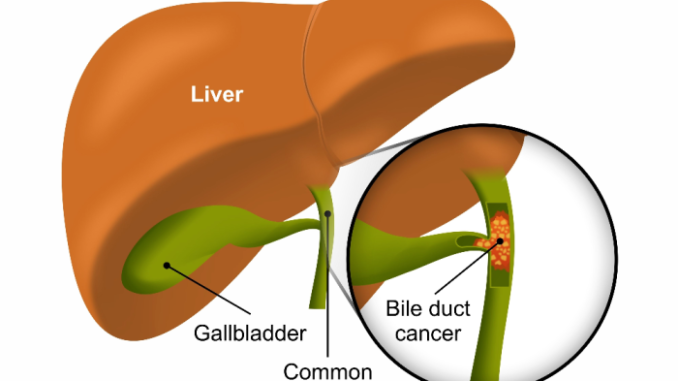
What is Bile Duct Cancer (Cholangiocarcinoma)?
- Bile Duct Cancer is a rare type of cancer that develops in the bile ducts. Bile ducts are the tubes that carry bile from the liver to the small intestine.
- Bile duct cancer is also known as also called Cholangiocarcinoma.
- This cancer begins when cells in the bile duct grow uncontrollably.
Anatomy of the Bile Duct System
- Bile duct consists of the organs and ducts, which are the bile ducts, gall bladder, and associated structures that are involved in the production and transportation of bile.
- The function is to drain waste products from the liver into the duodenum and help in digestion.
Types of Bile Duct Cancer (Cholangiocarcinoma)
1. Intrahepatic bile duct cancer
- Intrahepatic Cholangiocarcinoma occurs in the part of the bile duct within the liver.
- It is occasionally misdiagnosed as liver hepatocellular carcinoma.
2. Hilar bile duct cancer
- Hilar Cholangiocarcinoma is also known as Perihilar Cholangiocarcinoma.
- It is extrahepatic Cholangiocarcinoma, which occurs outside the liver, where the right and left bile ducts exit the liver to form a common bile duct.
3. Distal bile duct cancer
- It is also an extrahepatic Cholangiocarcinoma, which occurs where the common bile duct passes through the pancreas and enters the small intestines.
How Common is Bile Duct Cancer?
- Bile duct cancer (Cholangiocarcinoma) is rare in the United States but more common in Southeast Asia, especially in Thailand.
- Worldwide, both incidence and mortality of bile duct cancer are gradually increasing.
- According to the International Agency for Research on Cancer (IARC) report 2022, the incidence of liver and intrahepatic bile ducts cancer cases in Asia is 607361 cases. Likewise, the incidence in Europe, Africa and Northern America is 88871, 73844 and 48485 cases respectively.
| Region | Cases |
| Asia | 607361 |
| Europe | 88871 |
| Africa | 73844 |
| Northern America | 48485 |
| Latin America and the Caribbean | 42769 |
| Oceania | 4806 |
| Total | 866136 |
Source: IARC, 2022
Table 1: Incidence of Liver and Intrahepatic bile ducts cancer of both sexes, in 2022
Similarly, according to the International Agency for Research on Cancer (IARC), the mortality of liver and intrahepatic bile duct cancer is highest in Asia (530928), followed by Europe (79091), Africa (70315) and Latin America and the Caribbean (39351). Oceania has the lowest cases of mortality with 3965 cases.
| Region | Cases |
| Asia | 530928 |
| Europe | 79091 |
| Africa | 70315 |
| Latin America and the Caribbean | 39351 |
| Northern America | 35075 |
| Oceania | 3965 |
| Total | 758725 |
Source: IARC, 2022
Table 2: Mortality of Liver and intrahepatic bile duct cancer of both sexes, in 2022
Major Risk Factors of Bile Duct Cancer
1. Medical Factors
- Primary Sclerosing Cholangitis
- Bile-duct cysts
- Hepatolithiasis
- Inflammatory Bowel Disease (ulcerative colitis)
- Chronic Liver disease
2. Lifestyle and Environmental Factors
- Alcohol
- Smoking
- Obesity
3. Geographic Factors
- Parasitic Infection
Role of Liver Diseases and Bile Duct Disorders
- Chronic liver conditions like cirrhosis and hepatitis, increase the risk of bile duct cancer by causing persistent liver inflammation and scarring in the body.
What are the Early Warning Signs of Bile Duct Cancer?
- Yellowish skin and eyes
- Changes in stool color
- Changes in urine color
- Itching
- Abdominal Pain
- Loss of Appetite
- Enlarged Abdominal Mass
- Weight loss
- Fatigue
When should we seek Medical Care?
Medical care/health care must be immediately taken in the following conditions:
- Unusual changes in the body
- Symptoms like jaundice
- Changes in stool or urine colour
- Abdominal pain
How is Bile Duct Cancer Diagnosed?
1. Physical examination and health history:
- Reviewing medical and health history of a person along with proper medical examination.
2. Blood Test:
- Blood tests are also performed to assess the liver function to help find out how much bilirubin is present in the blood.
3. Tumor markers test:
- These tests measure the levels of carcinoembryonic antigen (CEA) and carbohydrate antigen (CA) 19-9 in our blood or urine.
4. Ultrasound:
- Ultrasound uses sound waves to create images of the abdomen and can show if the bile ducts are enlarged or blocked.
5. Magnetic Resonance Cholangiopancreatography(MRCP):
- It is a special type of MRI that is used to assess the organs and blood vessels around the bile ducts, which helps to diagnose bile duct cancer.
6. CT (or CAT) scan:
- CT scan helps to take clear pictures of the inside of the body to diagnose the cancer.
7. Biopsy:
- A biopsy is the only confirmatory test to confirm bile duct cancer. In biopsy, a small piece of tissue is taken from the bile and examined under a microscope to assess the presence of cancerous cells.
Stages of Bile Duct Cancer
The stages of bile duct cancer are determined by using the TNM system.
- T (Tumour): Size and extent of the main tumour
- N (Node): Spread to nearby lymph nodes
- M (Metastasis): Spread to distant parts of the body
Based on these three factors, the cancer is grouped into different stages, from early stage to advanced stage.
Stage 0
- In this stage, the cancer remains confined within the bile duct but has penetrated the deeper layers of its wall.
- It has not reached the nearby lymph nodes or other parts of the body.
Stage 1
- The cancer is still inside the bile duct but has grown into the deeper layers of the bile duct wall.
- However, it has not reached to lymph nodes or distant organs.
Stage 2
- During this stage, the cancer has grown through the bile duct wall and spread to nearby fat or liver tissue.
- However, it has not spread to distant organs.
Stage 3
Stage 3 is divided into two types:
- Stage 3A: The cancer has spread to nearby organs or major blood vessels but not to lymph nodes or distant sites.
- Stage 3B: The cancer has spread to nearby lymph nodes but not to the distant organs.
Stage 4
Stage 4 is also divided into two types:
- Stage 4A: The cancer has spread to major blood vessels and lymph nodes but not to distant organs.
- Stage 4B: The cancer has spread to distant lymph nodes or other parts of the body.
Treatment Options
1. Surgical Treatment for Bile Duct Cancer
There are two main types of surgery for bile duct cancer: curative surgery and palliative surgery.
- Curative (Resectable) surgery: This surgery is done when the cancer can be completely removed.
- Palliative Surgery (Unresectable Cancer): This surgery is done when the cancer cannot be fully removed.
Some common surgical options are:
- Removal of the bile duct.
- Partial hepatectomy.
- Whipple procedure.
- Surgical biliary bypass.
- Liver transplant.
- Stent or catheter placement.
2. Chemotherapy
Chemotherapy uses medicines that kill or slow the growth of cancer cells.
Chemotherapy may be used:
- After surgery, to help prevent the cancer from coming back
- Before surgery to shrink the size of the tumour
- For advanced stage cancer where surgery is not possible
- To relieve symptoms by slowing the growth of tumour
3. Radiation therapy
- Radiation therapy uses high-energy beams to destroy cancer cells.
- There are two main types of radiation therapy; external radiation therapy and internal radiation therapy.
- Radiation therapy is often given in combination with chemotherapy to improve effectiveness of the treatment.
4. Targeted Therapy
- It is a special type of treatment that uses drugs or other substances to identify and kill cancer cells.
- Targeted therapy only kills cancer cells.
- Common targeted therapies include: FGFR inhibitors, IDH1 inhibitors, and HER2-targeted therapy.
5. Immunotherapy
- Immunotherapy helps the body’s immune system recognize and destroy bile duct cancer cells.
- Drugs such as PD-1 inhibitors (Pembrolizumab), PD-L1 inhibitors (Durvalumab) and CTLA-4 inhibitors (Ipilimumab) are used during immunotherapy.
How can we Prevent Bile Duct Cancer?
- Bile duct cancer is certainly preventable. It can be prevented at different levels through promoting healthy lifestyle, avoiding tobacco and alcohol, taking vaccinations etc.
Primordial Prevention
- Promote healthy lifestyle from early life
- Discourage tobacco and alcohol use
- Improve sanitation and safe water supply
- Promote food safety to prevent liver fluke infection
Primary Prevention
- Avoid smoking and tobacco use
- Limit alcohol consumption
- Maintain healthy body weight
- Vaccination against hepatitis B
- Prevent hepatitis C and other liver infections
- Eat well-cooked food and drink safe water
Secondary Prevention
- Screen high-risk individuals
- Monitor chronic liver disease patients
- Early diagnosis and treatment of hepatitis
- Regular liver function tests and imaging
Tertiary Prevention
- Provide appropriate cancer treatment
- Manage complications such as jaundice
- Offer palliative and supportive care
Importance of Liver Health in Bile Duct Cancer Prevention
- Maintaining good liver health is very important to reduce the risk of bile duct cancer.
- Chronic liver diseases such as cirrhosis, long-term hepatitis B or C infection, and persistent liver inflammation are well known major risk factors for bile duct cancer.
- Therefore, reducing liver inflammation by preventing or treating viral hepatitis, limiting alcohol consumption, maintaining a healthy body weight, and avoiding tobacco can help protect the liver and bile ducts.
Prognosis and Survival Rates
Survival Rates vary depending on the stage, and prognosis is better when cancer is detected early.
| Type | Localized | Regional | Distant | Overall |
| Intrahepatic | 24% | 9% | 2% | 9% |
| Extrahepatic | 17% | 16% | 2% | 10% |
Quality of Life and Palliative Care
- The quality of life of a patient with bile duct cancer is certainly degraded to certain level. Thus, palliative care must be provided with utmost priority.
- Palliative care is a holistic approach that aims to improve the well-being of the patients with serious, incurable illnesses by managing physical, emotional, and spiritual suffering.
- The main goal of palliative care in patients with bile duct cancer is to relieve symptoms such as jaundice, pain, and itching.
- Common palliative treatments in bile duct cancer include surgical drainage, endoscopic stenting, and percutaneous drainage to ease bile duct obstruction and improve quality of life.
Support for Patients and Caregivers
- Family and friends play a key role in a patient’s emotional well-being by providing practical help, comfort, and reducing feelings of isolation.
- Caregivers may also experience stress and fatigue, so access to support and open communication is important for the caregivers
- Patient support groups and cancer organizations (eg, Cholangiocarcinoma Foundation) provide useful information, shared experiences, and emotional support for both patients and caregivers.
References and For More Information
- https://www.mayoclinic.org/diseases-conditions/cholangiocarcinoma/symptoms-causes/syc-20352408
- https://columbiasurgery.org/conditions-and-treatments/bile-duct-cancer-cholangiocarcinoma
- https://www.cancer.org/cancer/types/bile-duct-cancer/about/what-is-bile-duct-cancer.html
- https://www.hopkinsmedicine.org/health/conditions-and-diseases/biliary-system-anatomy-and-functions
- https://www.mdanderson.org/cancer-types/bile-duct-cancer/bile-duct-cancer-symptoms.html
- https://www.cancer.gov/types/liver/bile-duct-cancer/diagnosis
- https://www.cancercenter.com/cancer-types/bile-duct-cancer/stages
- https://www.urmc.rochester.edu/encyclopedia/content?contenttypeid=34&contentid=18860-1
- https://www.medicalnewstoday.com/articles/bile-duct-cancer-prognosis-2#outlook-by-stage
- https://massivebio.com/emotional-support-for-cholangiocarcinoma-patients-bio/
- https://www.cancer.gov/types/liver/bile-duct-cancer
- https://www.nhs.uk/conditions/bile-duct-cancer/
- https://www.mdanderson.org/cancer-types/bile-duct-cancer.html
- https://www.cancercouncil.com.au/gall-bladder-cancer/
- https://my.clevelandclinic.org/health/diseases/21524-cholangiocarcinoma
