Table of Contents
What is a Astrocytoma (Brain Cancer)?
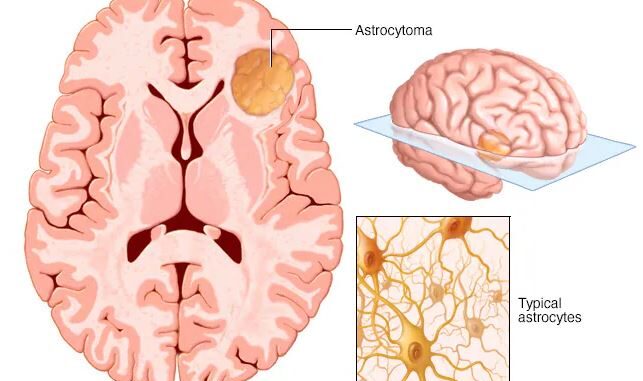
- An astrocytoma is a type of cancer that occur in the brain or spinal cord.
- Astrocytoma is a brain tumor that is most common in children.
- It can start anywhere in the brain and spinal cord, including the cerebrum, cerebellum, brain stem and eye nerve pathways.
- Glioma is the most common type of brain tumor, and an astrocytoma is a type of Glioma.
- In a child, an astrocytoma is usually found at the base of the brain; biopsy or surgery is needed to confirm the diagnosis.
Types of Astrocytoma in Children
An astrocytoma may be cancerous or noncancerous and can be categorized into four grades.
1. Noncancerous astrocytoma
Grade 1 Astrocytoma
- Pilocytic Astrocytoma: A slow-growing tumor that doesn’t tend to spread and most common grade 1 astrocytoma.
- Pleomorphic Xanthoastrocytoma: Slow-growing and most often develops in the temporal lobe, causing seizures.
- Subependymal giant cell Astrocytoma (SEGA): A tumor that mainly develops in children who have tuberous sclerosis, a genetic condition.
2. Cancerous Astrocytoma
- Grade 2 Astrocytoma: These can spread to nearby brain tissue.
- Grade 3 Astrocytoma: These are more aggressive than grade 2 and often present as a progression from grade 2.
- Grade 4 Glioblastomas: These are the most common form of astrocytoma and the most aggressive, which grow and spread rapidly.
Epidemiology of Brain Cancer
How Common Are Brain Cancer in Children?
- The most common solid tumors affecting children and adolescents are brain tumors, with nearly 5,000 children diagnosed each year.
Who are the most affected age Groups?
- Children and teenagers frequently develop brain tumors, while adults experience them less often.
What are the Causes & Risk Factors of Brain Cancer?
The exact cause of astrocytoma (brain tumor) is unknown; however, certain risk factors have been identified.
Genetic Factors
- Results from genetic mutations in astrocytes that lead to uncontrolled cell growth.
- Inherited cancer-predisposition syndromes associated with astrocytoma include:
- Li-Fraumeni syndrome
- Neurofibromatosis type 1
- Tuberous sclerosis
- Turcot syndrome
Environmental Factors
- History of high-dose ionizing radiation therapy to the head or neck is a well-established risk factor for astrocytoma.
- Individuals who received high-dose radiation for another cancer, especially during childhood, have a higher risk of developing astrocytoma later in life.
- Other environmental factors, such as chemical exposure and ultraviolet (UV) radiation, have not been clearly proven to cause astrocytoma.
Do Mobile Phones Cause Brain Cancer?
- The World Health Organization (WHO) reviewed large-scale studies and found no evidence that mobile phone use increases the risk of brain cancer, even among heavy users.
- Unlike ionizing radiation, radiofrequency (RF) radiation does not damage cells in a way that leads to cancer.
- Mobile phones emit non-ionizing RF radiation, which does not directly damage DNA.
- Based on current evidence, mobile phone use is not considered a proven risk factor for brain tumours, including astrocytoma.
What are the Signs & Symptoms of Brain Cancer?
Early Symptoms in Children
- Morning Headache
- Numbness in the body
- Seizures
- Nausea and vomiting
- Speech difficulties
- Vision problems
What are the Red Flags that Parents Should Not Ignore?
- Persistent or severe headaches, especially if they worsen over time or occur in the morning, can be an important warning sign.
- Repeated or unexplained vomiting, particularly when not linked to illness or food, should raise concern.
- Seizures, even a single episode in a child with no history, may indicate a serious brain problem.
- Changes in vision or hearing, such as blurred vision, double vision, or hearing loss, should be taken seriously.
- Weakness, numbness, or poor coordination in the arms or legs can suggest nerve or brain involvement.
- Marked changes in behavior, personality, or school performance may signal an underlying neurological condition.
- Parents and caregivers should seek prompt medical evaluation if any of these symptoms are noticed.
How Are Childhood Astrocytomas Diagnosed?
- CT scan: Uses X-rays and a computer to make detailed body pictures.
- MRI: Uses magnets and radio waves to make detailed pictures. Contrast dye may highlight cancer cells.
- MRS (Magnetic Resonance Spectroscopy): Shows metabolites in a tumour to tell if it’s active cancer or radiation damage.
- Lumbar puncture: Needle in lower back removes cerebrospinal fluid (CSF) to check for cancer cells.
- PET Scan: Radioactive sugar is injected; cancer cells absorb more sugar. The camera shows cancer spreading. Often combined with CT (PET/CT).
- Biopsy: Tumor cells removed and tested in a lab to confirm cancer type
Role of MRI, CT scan, and Biopsy
MRI, CT scans, and biopsies are essential diagnostic tools for Astrocytoma, helping to confirm the presence, type, and characteristics of the tumor.
What is the Treatment of Brain Cancer?
Surgery for Pediatric Astrocytoma
- Surgery is usually done to treat brain tumors to remove as much of the tumor as possible while maintaining brain function.
Chemotherapy and Radiation in Children
- Chemotherapy is a medicine given to kill tumor cells and stop their growth, given into the vein (IV), injected into tissue, or taken by mouth.
- Radiation therapy is high-energy radiation used to kill tumor cells or stop their growth.
Advances in Pediatric Neuro-Oncology
- Molecular Targeted Therapies: Better tumor classification and targeted biologic or immune therapies with different toxicity.
- Robotic Guided Biopsy and Laser Ablation: Alternatives to traditional biopsy, with both opportunities and risks.
- Proton Therapy and Radiosurgery: Advanced radiation methods for new and recurrent central nervous system tumors, though assessment can be complex.
- Radio-Genomics: Emerging field to improve diagnosis, prognosis, and treatment planning.
- Combination Therapies: Drugs such as idasantulin and selinexor show promise in reducing tumor burden and improving survival in laboratory models.
What is the Prognosis of Astrocytoma?
Depending on the tumor grade, surgery, adjuvant therapy, age, and neurological function, the prognosis of astrocytoma:
- Grade 1 (Pilocytic astrocytoma):
- Usually cured with surgery alone
- 5-year survival rate -96%
- Average survival: more than 10 years
- Grade 2 (Diffuse astrocytoma):
- Complete removal often not possible
- Median survival: 7–8 years
- Grade 3 (Anaplastic astrocytoma):
- Requires surgery and adjuvant therapy
- Median survival: about 5 years
- Grade 4 (Glioblastoma):
- Aggressive tumor needing surgery, chemotherapy, and radiation
- Median survival: 14–15 months
- Other factors affecting prognosis:
- Surgical removal: The More tumour is removed, the better the survival
- Adjuvant therapy: Chemotherapy and radiation can improve survival and control symptoms
- Age: Younger children generally survive longer
- Neurological status: Minimal symptoms and normal brain function, better prognosis
Public Health & Family Support in Brain Cancer
What are the Psychological Impact of Brain Cancer on Children?
- Children with brain tumors often experience increased anxiety and depression.
- Pediatric brain tumor survivors show poorer emotional and social adjustment compared with healthy peers.
- Survivors report lower overall quality of life in psychological, social, and school functioning.
What are the Psychological Impact of Brain cancer on Families and Caregivers?
- Families of children with brain tumours experience high levels of stress and emotional burden.
- Parents often have poor mental health and reduced life satisfaction during and after treatment.
- Caregivers report fear of recurrence and ongoing emotional distress even after successful treatment.
What are the Rehabilitation and Educational Support required during Brain Cancer?
- Rehabilitation helps patients recover movement, speech, daily activities, and independence after treatment.
- Physical therapy improves strength, balance, and mobility after surgery or neurological damage.
- Speech and language therapy helps with speech, swallowing, and communication problems.
- Cognitive and psychological support helps patients cope with learning, memory, and emotional changes.
- Educational support helps children return to school and continue learning after treatment.
- Regular communication between healthcare teams and schools improves educational outcomes.
References and For More Information
- https://radiopaedia.org/articles/who-grading-system-for-diffuse-astrocytomas
- https://www.cedars-sinai.org/health-library/diseases-and-conditions—pediatrics/a/astrocytoma-in-children.html#:~:text=An%20astrocytoma%20is%20the%20most,not%20need%20treatment%20right%20away
- https://www.cancerresearchuk.org/about-cancer/childrens-cancer/brain-tumours/types/astrocytoma
- https://my.clevelandclinic.org/health/diseases/17863-astrocytoma
- https://www.uhhospitals.org/blog/articles/2025/01/can-cell-phones-cause-brain-cancer
- https://www.hopkinsmedicine.org/health/conditions-and-diseases/brain-tumor/pediatric-brain-tumors
- https://braintumourresearch.org/pages/types-of-brain-tumours-astrocytoma?srsltid=AfmBOor9E6zXMg3WKnXQj87pS0fRyNucq-0EylwUensZrB0wMIHFQo0A
- https://www.ncbi.nlm.nih.gov/books/NBK559042/
- https://emedicine.medscape.com/article/283453-overview?form=fpf
- https://www.thebraintumourcharity.org/brain-tumour-diagnosis-treatment/types-of-brain-tumour-adult/astrocytoma/
- https://oncodaily.com/oncolibrary/cancer-types/astrocytoma
- https://www.pathologyoutlines.com/topic/cnstumorgliomasastrocytomasidhmutant.html
